

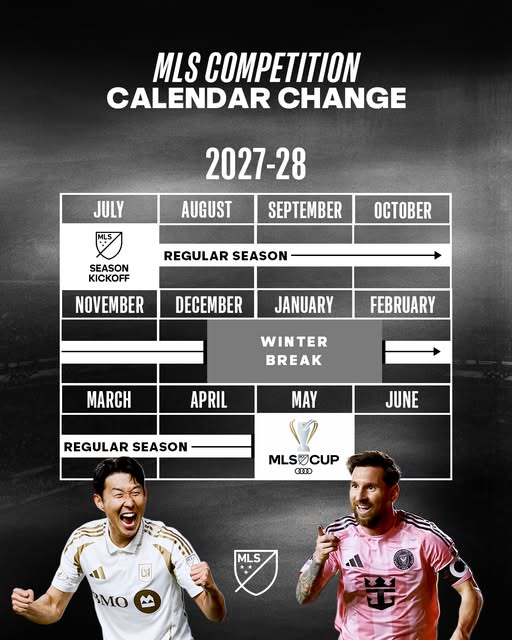
STWF Sports| NEW YORK / PALM BEACH, FL| November 13, 2025 — Major League Soccer is entering a new era. The league officially announced plans to shift its competition calendar to a summer-to-spring format, aligning MLS with Europe’s top leagues beginning with the 2027–28 season. The decision, ratified during Thursday’s MLS Board of Governors meeting in Palm Beach, marks one of the most transformative moves in the league’s 30-year history.
The transition, which MLS is finalizing in partnership with the Major League Soccer Players Association (MLSPA), will also introduce a revamped regular season structure and potential adjustments to the Audi MLS Cup Playoffs format. Commissioner Don Garber called the decision “one of the most important in our history,” underscoring its potential to reshape how American soccer competes on the global stage.
“Aligning our schedule with the world’s top leagues will strengthen our clubs’ global competitiveness, create better opportunities in the transfer market, and ensure our playoffs take center stage without interruption,” Garber said. “It marks the start of a new era for our league and for soccer in North America.”
Inside the New MLS Calendar
The new 2027–28 season will kick off in mid-to-late July 2027 and conclude in May 2028, with the Audi MLS Cup Playoffs taking place in ideal late-spring weather. A midwinter break from mid-December through early February will replace the traditional summer hiatus, bringing MLS in line with leagues such as the Premier League, Bundesliga, and La Liga.
Before the change takes full effect, MLS will stage a “transition season” from February to May 2027, featuring a shortened 14-game regular season, followed by playoffs and MLS Cup. That campaign will determine qualification for the Lamar Hunt U.S. Open Cup, Canadian Championship, Leagues Cup, and Concacaf Champions Cup.
Strategic Advantages of the Shift
The calendar realignment delivers several long-term benefits designed to elevate MLS within the global football ecosystem:
1. Enhanced Transfer Market Opportunities — Aligning with global transfer windows will allow MLS teams to buy and sell players alongside top European and South American clubs. The change positions MLS to attract marquee signings during the summer window without midseason disruptions.
2. Better Integration With FIFA Calendar — The new schedule reduces overlap with FIFA international match windows, allowing players to represent their national teams without missing league fixtures — a persistent challenge for clubs during summer tournaments like the Gold Cup and Copa América.
3. Elevated Playoff Exposure — Holding the MLS Cup Playoffs in May removes conflicts with major fall sports, such as the NFL and college football, ensuring MLS’s championship receives prime coverage and attendance.
4. Improved Player Performance — With a balanced rhythm and fewer scheduling conflicts, players can maintain better form and fitness throughout the season, while fans will experience a more consistent, uninterrupted viewing calendar.
How the Decision Came Together
The new format follows a two-year review process that began in October 2023, incorporating feedback from club owners, players, executives, and fans. According to league research, 92% of MLS viewers supported the shift, citing benefits such as improved player availability, better competition alignment, and a May postseason finale.
Extensive weather and logistics studies were also conducted to ensure minimal impact on northern markets. While MLS plans to reduce the number of winter home matches in cold-weather cities, projections show that 91% of total matches will still occur within the same general time frame as the current schedule.
Reactions From Across the Soccer Landscape
The announcement drew praise from coaches, players, and executives who see the change as a major step forward for the league’s global ambitions.
Mauricio Pochettino, head coach of the U.S. Men’s National Team, called the move “a great step forward.”
“Aligning with the international calendar will have a huge positive impact on players, coaches, and clubs,” Pochettino said. “It will even benefit youth national teams by giving access to players during crucial development periods.”
Gregg Berhalter, Chicago Fire FC head coach, agreed, saying,
“The beauty of MLS is its evolution. Moving to an international calendar positions us on par with the best leagues in the world.”
Former U.S. captain Clint Dempsey also supported the change:
“Being aligned means players are sharper when called into camp, and it’s easier for everyone — players, coaches, and fans — to follow the game year-round.”
On the club side, NYCFC CEO Brad Sims highlighted the commercial growth potential.
“Aligning with the international calendar provides the best opportunity to continue building on soccer’s momentum in North America,” Sims said.
Meanwhile, LA Galaxy GM Will Kuntz called it “a game changer” for roster building, and Sporting Kansas City President David Lee praised the timing of the postseason.
“Moving the playoffs to May avoids FIFA conflicts and a crowded sports calendar. It’s a significant improvement.”
A New Era for North American Soccer
As MLS approaches its 30th anniversary season in 2025, this calendar shift may prove to be one of its most defining milestones. With Apple TV’s MLS Season Pass continuing to expand the league’s global reach and new clubs and stadiums on the horizon, MLS is positioning itself to compete not just within the U.S. and Canada, but across world football.
The summer-to-spring model will align the league’s rhythm with the heartbeat of the global game — ensuring that when the world’s biggest leagues play, Major League Soccer will no longer be watching from the sidelines, but playing alongside them.