



The University of Memphis (Memphis) is a public research university in Memphis, Tennessee, United States. Founded in 1912, the university has an enrollment of more than 20,000 students.[6]
The university maintains the Herff College of Engineering, the Center for Earthquake Research and Information (CERI), the Cecil C. Humphreys School of Law, the School of Communication Sciences and Disorders, the former Lambuth University campus in Jackson, Tennessee (now a branch campus of the University of Memphis), the Loewenberg College of Nursing, the School of Public Health, the College of Communication and Fine Arts, the FedEx Institute of Technology, the Advanced Distributed Learning Workforce Co-Lab, and the Institute of Egyptian Art and Archaeology. The University of Memphis is classified among “R1: Doctoral Universities – Very High research activity”.[7][8]
History

In 1909, the Tennessee Legislature enacted the General Education Bill. This bill stated that three colleges be established, one within each grand division of the state and one additional school for African-American students. After much bidding and campaigning, the state had to choose between two sites to build the new college for West Tennessee: Jackson and Memphis. Memphis was chosen, one of the main reasons being the proximity of the rail line to the site proposed to build the new college for West Tennessee. This would allow professors and students to go home and visit their relatives. The other three schools established through the General Education Act evolved into East Tennessee State University (ETSU), Middle Tennessee State University (MTSU), and Tennessee State University (TSU).
Prior to the establishment of the West Tennessee State Normal School[9] pursuant to the General Education Bill, a number of higher education departments existed in Memphis under the banner of the University of Memphis. This earlier University of Memphis was formed in 1909 by adding to an already existing medical school’s departments of pharmacy, dentistry, and law.[10]
On September 10, 1912, West Tennessee State Normal School[11] opened in Memphis; its first president was Seymour A. Mynders.[12] By 1913 all departments of the earlier University of Memphis, except the law school, had been taken over by West Tennessee State Normal School.[10][13] After Mynders’ death in 1913, John Willard Brister was chosen to take his place. After Brister’s resignation in 1918, Andrew A. Kincannon became president. In 1924, Brister returned to his post as president of the school.
The name changed in 1925 to West Tennessee State Teachers College. In 1931, the campus’ first newspaper, The Tiger Rag, was established. In 1939, Richard C. Jones became president of WTSTC. In 1941, the name was changed to Memphis State College, when the college expanded its liberal arts curriculum. In 1943, Dr. Jennings B. Sanders succeeded Jones as president. Three years later, the first alumnus to become president, J. Millard (Jack) Smith, was appointed. In 1951 MSC awarded its first B.A. degree. In 1957 the school received full University status and changed its name accordingly to Memphis State University.


In 1959, five years after Brown v. Board of Education was decided by the Supreme Court of the United States, holding that racial segregation in public education was unconstitutional, the university admitted its first black students. Racial segregation was the norm throughout the South at the time. The Memphis State Eight, as they were known, were admitted to Memphis State University. Their presence on campus was the focus not only of intense media scrutiny but severe criticism from much of the local public. Ostensibly for the black students’ safety and to maintain an air of calm on the campus, university administrators placed certain stringent restrictions on where and when the black students could be on campus. They were to go only to their classes, not to any of the public places on campus, such as the cafeteria; and they were to leave the campus immediately after they had finished their last class. These limitations were lifted after the novelty of their presence on campus had subsided and the public’s focus on their presence there had lessened, and as more and more black students were admitted to the university, all such social restrictions were dropped. Today, black students make up more than one-third of the campus student body and participate in all campus activities.
Cecil C. Humphreys became president of MSU, succeeding Smith, in 1960. In 1966, the school began awarding doctoral degrees. Humphreys resigned as MSU president to become the first chancellor of the newly formed State University and Community College System, later renamed the Tennessee Board of Regents. John Richardson was appointed interim president.
In 1973, Dr. Billy Mac Jones became president. Also that year, the Memphis State Tigers men’s basketball team reached the finals of the NCAA tournament, only to fall at the hands of a UCLA team led by future NBA superstar and Basketball Hall of Famer Bill Walton in the NCAA Basketball Championship Game in St. Louis, Missouri. In 1980, Thomas Carpenter became president of MSU; he was succeeded by V. Lane Rawlins in 1991. On July 1, 1994, Memphis State University changed its name again, to the current University of Memphis.
V. Lane Rawlins served from 1991 to 2000; Dr. Ralph Faudree filled in as interim president for one year after V. Lane Rawlins’ departure. In 2001, The U of M installed its first female president, Shirley Raines, who retired in the summer of 2013. During her tenure (in 2008), the Tigers men’s basketball team again reached the NCAA Finals, only to later have the appearance vacated after an NCAA investigation. After a yearlong search, Dr. M. David Rudd was confirmed as the 12th president on May 1, 2014.[14] In the spring semester of 2020, the university joined thousands of other institutions and made a mid-semester shift to online classes as a result of the COVID-19 pandemic, and also introduced a credit/no credit grade option in lieu of the traditional grading scale for that semester.[15]
Campus
 |
This section’s factual accuracy may be compromised due to out-of-date information. (February 2024)
|

The University of Memphis campus is located approximately 5 miles (8.0 km) east of downtown in the University District neighborhood of east Memphis. It has an area of 1,160 acres (4.7 km2), although this figure does not include the law school in the former United States federal customshouse in downtown Memphis, which opened in January 2010. The historic core of campus encompasses approximately 30 acres (120,000 m2).

Campus planners have significantly increased the amount of green space and the number of walkways over the past several years while maintaining the original historic architecture of the campus.
Surrounding the university’s main campus are several historic neighborhoods to the north and east, as well as the University District neighborhood and the commercial Highland Strip to the west. Many University of Memphis college students also reside in housing south of the main campus.
Layout
The University of Memphis campus is set out in a rectilinear format, planned as a geometric design similar to the Jeffersonian style of the University of Virginia.
Despite the gradual expansion of the campus to the West and South, the campus is fairly compact and retains a park-like, tree-lined setting. The farthest distance on campus takes about twenty-five minutes to walk. According to the most recent master plan, the University of Memphis is projected to expand and redevelop additional areas one block west of the main campus’ current western boundary of Patterson St., making Highland Avenue the “de facto” entrance to the university.[16]
Main Campus


The center of the main campus comprises buildings that made up the original campus. The first college buildings, including Scates Hall, Manning Hall, Mynders Hall, and Administration Building, were erected in the early 20th century. This section stretches from Patterson St. south to the end of the main campus at Walker Ave., with most buildings surrounding Alumni Mall and Student Plaza. The majority of the buildings of the arts and humanities departments, as well as those of the Physics and Astronomy departments of the College of Arts and Sciences, are located in the original areas of campus.


Flanking the original area of campus to the east are the areas of major research for The Life Sciences and Engineering departments, including J.M. Smith Hall, Life Sciences Building and Herff College of Engineering Complex, as well as the College of Education, residing in E.C. Ball Hall, and the Art Museum of the University of Memphis, located in the Communication and Fine Arts Building. The Ned R. McWherter Library, a state-of-the-art library facility and one of the premier research libraries of the Mid-South United States, takes up the eastern part of the campus adjacent to Dunavant Plaza and Emeriti Grove.

The northwestern area of the main campus includes The Fogelman College of Business and Economics, The Fogelman Executive Center (a major conference center for regional executives visiting The University of Memphis that is now mainly occupied by the University Middle School, with plans to incorporate a predecessor to a High School education completing the long dreamt of k-college experience), and The FedEx Institute of Technology, a major research contributor in the areas of Supply Chain Management, Nanotechnology, Robotics and Intelligent Systems. Originally, at the north end of the campus, Norriswood Avenue formed the northern boundary. The campus expanded into this residential area in the late 1960s and early 1970s.

The western edge and southwest corner include Johnson Hall (comprising the Geography and Geology Departments), Patterson Hall (housing the English department), John S. Wilder Tower (formerly Brister Tower), Greek Row, and the bulk of The University of Memphis residence halls. As The University of Memphis presses ahead with its planned expansion, many more facilities, pedestrian access, and green space will also be created with the renovation and development of the current residential block west of Patterson St. in the University District neighborhood.
On January 29, 2013, Governor Bill Haslam announced a $44.6 million state budget pledge for the Community Health Building, which is the new home of The Loewenberg College of Nursing and The School of Communication Sciences and Disorders. The University of Memphis was required to raise $15 million from private funds to match the state funds.
In 2017, the university announced plans for a new Veterans Care Center on campus. Located in the Psychological Services Center on campus, the Veterans Care Center “will address the mental health needs of veterans, regardless of era, gender, discharge status or service connection.”[17]
In 2019, the university opened the Hunter Harrison Memorial Bridge, providing for the first time in school history a pedestrian crossing that connects the main campus and the campus areas south of the Norfolk-Southern railroad with uninterrupted access. This bridge connects to the new Southern Parking Garage, as well as the new $30 million Student Recreation & Fitness Center completed in 2021, expanding the area of the campus south of the railroad tracks. The university completed construction in November 2022 of the new $44 million Rudi E. Scheidt School of Music building on Central Ave., beginning a major northward expansion of campus across Central Ave.
Park Avenue Campus
Directly south of the main campus along the corner of Park Avenue and Getwell Road sits the Park Avenue Campus, formerly known as South Campus. The Park Avenue Campus was formerly the site of Kennedy Veterans Hospital from 1942 until 1967 when the U.S. Government donated the land and buildings to the university. Very few buildings from the Kennedy Hospital days remain on campus. The Park Avenue Campus is home not only to various intramural athletics programs and facilities, but also to various research facilities, classrooms and the Community Health Building, which houses the School of Communication Sciences and Disorders, the Memphis Speech and Hearing Center, and the Loewenberg College of Nursing. The Defense Contract Audit Agency formerly operated its main training facility on the Park Avenue Campus from 1982 to the early 2010s. WKNO formerly operated its FM and television stations on the Park Avenue Campus as well.
Future plans include a regulation indoor soccer stadium and track facility, capable of hosting large-scale NCAA Division I track-and-field meets.[18]
The graduate and family housing units are located at Park Avenue, 1 mile (1.6 km) from the main university campus. The complex has 150 housing units.[19] Residents are zoned to Memphis City Schools.[20] The zoned schools are Sherwood Elementary School,[21] Colonial Middle School,[22] and White Station High School.[23]
Downtown Law School Campus
In 2006, plans were announced that the University of Memphis, School of Law would relocate to the former U.S. Post Office & Customs House in downtown Memphis. This facility pre-dates the existence of the university itself, having been constructed in multiple sections between 1885 and the early 1920s. In 2010, the law school was moved permanently from the main campus to the newly renovated downtown campus. The new University of Memphis, School of Law campus sits adjacent to downtown courts and the financial and administrative center of the city. It has been ranked multiple times among the top law school facilities in the U.S.
Lambuth Campus
In 2011, the University of Memphis began offering undergraduate and graduate programs on the former Lambuth University campus in Jackson, Tennessee, located approximately 80 miles (130 km) east of Memphis. Now known as the University of Memphis Lambuth Campus, the historic campus includes classroom buildings, dormitories, a library, a planetarium, and athletic facilities. Enrollment in the fall of 2011 stood at 246 students. Enrollment in the spring of 2018 was the first time enrollment surpassed 1,000 students, with a total of 1,038 students. The 2019–2020 term was the first term, to begin with an enrollment of over 1,000 students for the campus, with an official enrollment of 1,070 students. In the fall of 2020, enrollment had risen to 1,285 students.[24]
Environmentalism
The Edward J. Meeman Biological Station of the University of Memphis conducts research in ecology, environmental biology, and natural history. It is named for Edward J. Meeman, an editor of the former Memphis Press-Scimitar newspaper who later established a foundation to fund environmental studies.[25]
In 2007, President Shirley Raines signed the American College and University President’s Climate Commitment (ACUPCC), which requires that the university become carbon neutral.[26]
The Green Campus Initiative works to develop and implement a strategic plan to achieve the goals of the APUPCC. Successful events and projects include the May 2009 2nd Annual E-Recycling Day, resulting in 155 tons of electronic items collected, and the Tiger Initiative for Gardening in Urban Settings (TIGUrS), a fruit and vegetable gardening initiative across campus.[27]
In April 2008, the student-run Environmental Action Club ran a Green Power Campaign to promote a student referendum to add a “Green Fee” to tuition payments to fund clean, renewable energy and other campus sustainability projects. The referendum passed with a 69% student approval rate. The university is now purchasing renewable energy through the TVA‘s Green Power Switch program and offsetting 10% of current energy use. It is now the 2nd largest green power purchaser in the entire TVA distribution region.[28]
In February 2009, the TERRA (Technologically and Environmentally Responsive Residential Architecture) sustainable design demonstration house was completed. Designed by the Department of Architecture, the LEED Platinum TERRA house serves as a studio for which architecture and design students to design “green” housing within urban areas, as well as serve as a demonstration house open for tours and serving as an educational tool for the community.[29]
Memphis received a grade of “C” on the 2009 Campus Sustainability Report Card published by the Sustainable Endowments Institute.[30] Only 34 schools earned a higher grade.[31]
Organization

| Academic rankings | |
|---|---|
| National | |
| Forbes[32] | 498 |
| U.S. News & World Report[33] | 266 (tie) |
| Washington Monthly[34] | 149 |
| WSJ/College Pulse[35] | 501–600 |
| Global | |
| U.S. News & World Report[36] | 1322 (tie) |
The University of Memphis was previously associated with the Tennessee Board of Regents (TBR) system. In 2017, after the passing of the FOCUS Act legislation, the university left the Tennessee Board of Regents and established its own governing board, The University of Memphis Board of Trustees.[37] Within this framework, the president of the University of Memphis is the day-to-day administrator of the university.
The University of Memphis today comprises a number of different colleges and schools:
- College of Arts and Sciences
- Fogelman College of Business and Economics
- College of Communication and Fine Arts
- College of Education
- Herff College of Engineering
- College of Professional and Liberal Studies
- Loewenberg College of Nursing
- Kemmons Wilson School of Hospitality and Resort Management[38]
- School of Communication Sciences and Disorders
- Cecil C. Humphreys School of Law
- Graduate School
- School of Public Health
- Rudi E. Scheidt School of Music
- Helen Hardin Honors College
The University of Memphis is host to several centers of advanced research:
- FedEx Institute of Technology
- Center for Earthquake Research and Information
- Institute for Intelligent Systems
- Advanced Distributed Learning Workforce Co-Lab
- The Sparks Bureau of Business and Economic Research
- Mobile Sensor Data-To-Knowledge Center (NIH Center of Excellence)
- Center for Applied Earth Science and Engineering Research
The University of Memphis Foundation, founded in 1964, manages the university endowment and accepts, manages and disburses private support to the university.[39]
Student life
| Race and ethnicity | Total | ||
|---|---|---|---|
| Black | 41% | ||
| White | 37% | ||
| Hispanic | 11% | ||
| Asian | 5% | ||
| Two or more races | 4% | ||
| International student | 2% | ||
| Unknown | 1% | ||
| Economic diversity | |||
| Low-income[a] | 47% | ||
| Affluent[b] | 53% | ||
Athletics
_(cropped).jpg "Memphis Tigers 16")
Student organizations
There are hundreds of student organizations on the University of Memphis campus.[41]
Student newspaper
The Daily Helmsman is the student newspaper of the University of Memphis. The publication is part of a tradition which began in 1931 as The Tiger Rag, a protest newspaper. Since that time, the newspaper has been continuously published by University of Memphis students. Even during World War II when paper and other resources were scarce, the newspaper was published as a newsletter and posted on bulletin boards around campus.
The name of the newspaper was changed to The Helmsman in 1972 and became The Daily Helmsman in 1981 when the newspaper began publishing four days a week. In 2021, the paper moved to weekly publication.
The Helmsman has won many honors over the years for reporting, photography and design, including awards given by the William Randolph Hearst Foundation, Columbia University and the Southeastern Journalism Conference. Helmsman alumni have gone on to jobs at many prestigious news organizations, such as The New York Times, Rolling Stone magazine, and Southern Living magazine, among others. In 2012, The Helmsman and then-Editor-in-Chief Chelsea Boozer were awarded the College Press Freedom Award for their efforts fighting “a retaliatory budget cut while enduring a campaign of harassment by campus police.”[42] The award is given annually by the Student Press Law Center and the Associated Collegiate Press. Boozer also won a national Investigative Reporters and Editors award for coverage of how student activity fees are spent, including how the Student Government Association writes its senior officers’ free tuition, parking and stipends out of the money collected from the student body.
Religious organizations
Numerous religious centers are located on the campus, including the Wesley Foundation (a United Methodist student center), the Baptist Collegiate Ministry, the university Catholic Center and Catholic Student Center, Ukirk (a PCUSA campus ministry) Barth House Episcopal Student Center, Reformed University Fellowship, the Soma Christian Student Center (a Church of Christ-supported center), Memphis Hillel, and the Muslim Students Association. Numerous other religious clubs of various faiths also exist on campus, which meets in various locations.
Honor societies
There are 11 honor societies on campus.
Greek life
About six percent of undergraduate men and eight percent of undergraduate women are active in Memphis’ Greek system. There are over 20 social Greek letter organizations on campus.[43] However, since the late nineties, Greek campus participation has been decimated due to social issues.
Traditions
The University of Memphis has accumulated numerous traditions over its long history within the Tennessee Board of Regents system.
Mighty Sound of the South
The Mighty Sound of the South Band is the university’s band. The band performs at Memphis Tigers football games as a marching band and at Tigers basketball games as a pep band. As one of the oldest institutions at the university, the Band partakes in many of the game day traditions. The MSS performs more than any other student ensemble on campus and for approximately 350,000 fans each fall. The MSS is featured at nearly every campus-wide event, ranging from Freshman Convocation to the Homecoming Parade and Pep Rally. The band has been featured on the nationally syndicated “Mike & Mandy” Radio Show, and is a star attraction at the Bandmaster’s Championship, a high school marching band contest administered by The University of Memphis Band Alumni Chapter. Members of the MSS represent all academic disciplines across campus and historically have been open to all students via audition.
Mascot
For over 30 years, since 1972, the sideline mascot for The University of Memphis has been a live Bengal tiger named TOM. During this time, the university has hosted three successive tigers, known respectively as TOM I, TOM II, and TOM III. The university also has a costumed tiger mascot known as Pouncer.
Throughout the majority of the TOM era, the tiger attended all Tiger football home games and other University events. TOM traveled in a climate-controlled trailer with a police escort and was housed and cared for by the Highland Hundred Tiger Guard, an alumni booster organization in a $300,000 facility.
TOM II matured, eventually weighing more than 500 pounds (230 kg). The University of Memphis was one of only two universities in America with a live tiger mascot (the other being LSU in Baton Rouge). After being diagnosed with mouth cancer, TOM II was euthanized on October 15, 2008, at the age of 17. The team of veterinarians who oversaw TOM II decided this was necessary to ensure he did not suffer due to his illness.
TOM III, the most recent tiger, died on September 18, 2020.[44] Following TOM’s passing it was announced that there would be a TOM IV, but it would be housed and remain at the Memphis Zoo.[45]
The university currently has fifty tiger statues located on campus and another fifty located around the Memphis area. The Alumni Association placed the life-sized tigers around the city in honor of the university’s centennial in January 2012.[46]
Nickname
When the University of Memphis first fielded a football team in the fall of 1912, no one had selected a nickname for the squad. Early references to the football team tabbed them only as the Blue and Gray Warriors.
After the final game of the 1914 season, there was a student parade. During this event, several university students shouted, “We fight like Tigers!” The nickname was born. As time passed, the nickname “Tigers” was increasingly used, particularly in campus publications, but did not catch on with the newspapers downtown. They continued to use “the Blue and Gray” when referring to the university. Blue and Gray represented the unity of the United States and in 1976, the Tigers wore red, white and blue in celebration of the United States Bicentennial.
Under Coach Lester Barnard in 1922, Memphis’s football team gave a ring of truth to that old student yell about Tigers. The team adopted a motto – “Every Man a Tiger” – and went on to score 174 points while allowing its opponents just 29 points. The Tiger nickname continued with students and alumni, eventually being adopted as the official nickname for the University of Memphis in 1939.
Song
Notable among a number of songs commonly played and sung at various events such as commencement and convocation, and athletic games is “Go! Tigers! Go!”, the University of Memphis Tigers’ fight song. The fight song was written by Tom Ferguson, former Director of Bands at Memphis State University during the 1960s.
Special programs and institutes
Tennessee Governor’s School for International Studies
The Governor’s School for International Studies is an academic summer program for gifted junior and senior high school students in Tennessee. It is a selective program located at the University of Memphis in which students study two political sciences, a foreign language, and an elective of their choice from the international studies curriculum. The students, upon finishing the four-week term, gain six hours of college credit which may be transferred to any Tennessee Board of Regents School.[47]
Chucalissa Indian Village
UofM also operates the Chucalissa Indian Village, an American Indian heritage site and museum. Officially known as the T. O. Fuller State Park, the location includes a museum and important archeological sites.
The Benjamin L. Hooks Institute for Social Change
Founded in 1996 by civil rights activist Benjamin L. Hooks, and faculty of the department of political science at the University of Memphis, the Benjamin L. Hooks Institute for Social Change at the University of Memphis is dedicated to preserving the history of the civil rights movement and continuing the struggle for equality championed by its namesake. The Hooks Institute is housed within the College of Arts and Sciences at the University of Memphis. The mission of the Hooks Institute is to teach, study and promote civil rights and positive social change. This mission is implemented through a variety of programs focused on the scholarship of the civil rights movement, public policy research and scholarship, commemorations and grants focused on continuing scholarship of the civil rights movement, public events focused on civil rights and social change, media focused on the civil rights movement including documentary films and websites, and direct engagement programs to improve the conditions of marginalized communities.[48]
Notable people
List of presidents
- Seymour A. Mynders (1912–1913)
- John Willard Brister (1913–1918)
- Andrew A. Kincannon (1918–1924)
- John Willard Brister (1924–1939)
- Richard C. Jones (1939–1943)
- Jennings B. Sanders (1943–1946)
- J. Millard (Jack) Smith (1946–1960)
- Cecil C. Humphreys (1960–1972)
- John Richardson (1972–1973) interim
- Billy Mac Jones (1973–1980)
- Thomas G. Carpenter (1980–1991)
- V. Lane Rawlins (1991–2000)
- Ralph Faudree (2000–2001) interim
- Shirley C. Raines (2001–2013)
- R. Brad Martin (2013–2014) interim
- M. David Rudd (2014–2022)
- Bill Hardgrave (2022–Present)
Notable alumni
-
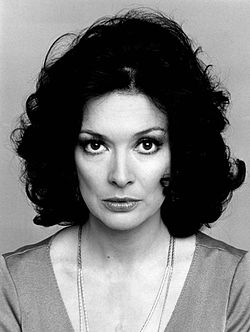 American actress
 -
 U.S. Representative, 9th Congressional District, Tennessee
 -
 Noted cognitive scientist
 -
 American football player
 -
 Singer-songwriter
 -
 jazz pianist
 -
 Maj General, U.S. Army, aeromedical evacuation pioneer
 -
 Writer
 -
 First overall pick in 2008 NBA Draft
 -
 Former U.S. Senator
 -

-
 American football player


The Memphis Tigers men’s basketball team represents the University of Memphis in NCAA Division I men’s college basketball. The Tigers have competed in the American Conference since 2013. As of 2020, the Tigers had the 26th highest winning percentage in NCAA history.[2] While the Tigers have an on-campus arena, Elma Roane Fieldhouse (which is still the primary home for Tigers women’s basketball), the team has played home games off campus since the mid-1960s. The Tigers moved to the Mid-South Coliseum at the Memphis Fairgrounds in 1966, and then to downtown Memphis at The Pyramid, initially built for the team in 1991 and later home to the NBA’s Memphis Grizzlies. In 2004, both teams moved to a new downtown venue, FedExForum. ESPN Stats and Information Department ranked Memphis as the 19th most successful basketball program from 1962 to 2012 in their annual 50 in 50 list.[3]
History
Early years
The predecessor of the University of Memphis, West Tennessee State Normal School, first put a basketball team on the court in 1920. Zach Curlin began coaching the team in 1924. The Tigers joined the Mississippi Valley Conference in 1928. The team played its early home games at a local high school gym, a local YMCA, and in a room on campus called the “Normal Cage” which allowed only six inches from the court lines to the walls. In 1929, a $100,000 facility on campus named Memorial Gym became the Tigers’ home.[4]
Curlin’s last season coaching the Tigers was in 1948, by which time the school had been renamed Memphis State College; it would become Memphis State University in 1957. His successor was McCoy Tarry. In 1951, the new $700,000 Fieldhouse gym was opened for Tiger home games. In 1952, John Wallesea became the first Memphis State player to be drafted by the NBA. Forest Arnold became the school’s first All-American in 1954. The Tigers made the NCAA tournament for the first time, in 1955, under coach Eugene Lambert. Bob Vanatta became the team’s coach in 1956 and took the Tigers to the NIT final. Win Wilfong became the team’s second All-American in 1957.[4]
In 1962, Dean Ehlers took over coaching duties. The Tigers began playing its home games at the Mid-South Coliseum in 1964. Moe Iba became the team’s coach in 1966, the same year the team joined the Missouri Valley Conference.[4] Iba’s four years running the program are considered the low point in the history of Memphis basketball, with the team suffering 19 and 20 loss seasons before Iba’s dismissal. However, the Tigers did not remain down for long.
1970s

In 1970, Gene Bartow was named head coach. The 1970 season also saw the first games of Larry Finch and Ronnie Robinson, two all-time greats. Larry Finch scored 24 points in his first appearance as a freshman. In 1971, the Tigers led by Finch and Robinson upset conference rival Louisville. At 11–2, they were ranked #19 after not reaching the Top 20 in a decade. Early in the 1971–1972 season, Memphis State fell in a heart breaker to No. 2 Marquette after leading by five points with five minutes to go. After defeating Louisville in Freedom Hall, the Tigers shared the Missouri Valley Conference title in 1972 with Louisville. Louisville won a playoff to represent the MVC in the NCAA Tournament while the Tigers went to the NIT for their fifth time.
During the 1972–73 season, seniors Finch and Robinson led the Tigers to one of their most successful seasons. Memphis State won the MVC outright in 1972 after winning 14 straight games. They went to the NCAA tournament where they handily beat South Carolina and Kansas State after a first round bye to reach the Final Four. After beating Providence, the Tigers went to play for the national championship against the UCLA Bruins led by legendary coach John Wooden and led by star Bill Walton. Keeping it close in the first half, the Tigers were overwhelmed in the second half eventually losing by 21, 87–66. Bartow won the NABC National Coach of the Year award that season and Larry Finch was named a consensus All-American. Also on the Finals team was Larry Kenon who went on to be a 2-time All-Star in the NBA. He remains one of the most successful NBA players in Memphis history. Wayne Yates took over for Bartow in 1974 when Bartow left for Illinois. Yates led Memphis State to three straight 20-win seasons, including an NCAA Tournament berth in 1976. The Tigers left the Missouri Valley Conference to become one of the inaugural members of the Metro Conference in 1976. Dana Kirk became head coach in 1979.[5]
1980s
In the 1980s, the Tigers made seven NCAA tournaments and won three Metro Conference titles, amassing a record of 230–87 (.726). Keith Lee began playing for the Tigers in 1982, and Memphis was ranked number one in both major national polls for the first time the same year. However, that same night they were knocked off by Virginia Tech 69–56 in Blacksburg.[6] In the 1983 NCAA tournament, the Tigers beat Georgetown led by Patrick Ewing, whom Lee dominated in the paint. They lost their next game to top-seed Houston led by Hakeem Olajuwon.[5]
After finishing 24–3 in the regular season, the 1984–1985 season proved to be another memorable one in Tiger history. Lee eventually led the team to another NCAA tournament in 1985. Memphis State beat Penn, UAB, Boston College and Oklahoma to reach the school’s second Final Four. They were defeated by eventual champion Villanova and finished the season 31–4. All but one of the 12 players on this team were from the Memphis metro area.[7] Lee was named a consensus All-American for the third time in his four-year career. In 1986, Kirk was forced out after becoming the subject of a criminal investigation. He was also found to have committed many NCAA violations as well. The Tigers were forced to sit out the 1987 NCAA tournament and were stripped of all of their NCAA tournament appearances from 1982 to 1986, including the 1985 Final Four run. Kirk’s top assistant, Larry Finch, one of the leaders of the fabled 1972–73 team, took over head coaching duties in 1986. One of Finch’s first recruits, Elliot Perry, began playing for the team in 1987. Perry led Memphis State to the 1988 and 1989 NCAA Tournaments and was drafted to the NBA where he became a successful player. In the 1988–89 season, the Tigers set a school record by starting the game against arch-rival Louisville with a 24–0 run.[5]
1990s

In 1990, Finch landed the country’s highest rated high school recruit, Anfernee “Penny” Hardaway. The Tigers also moved to the Great Midwest Conference and began playing their home games at the new Pyramid Arena (affectionately known as the “Tomb of Doom”) in 1991. Stand-out Hardaway led Memphis State to the 1992 NCAA tournament, where the Tigers were defeated in the Elite Eight by rival Cincinnati. The following summer, Hardaway was named All-American and earned a chance to train with the Dream Team before the Barcelona Olympics. During the 1992–93 season, Hardaway earned Memphis State’s first triple-double and then the first back-to-back triple-doubles in wins over Georgia State and Vanderbilt. On February 6, 1993, the school achieved its 1,000th all-time basketball victory in an upset over No. 4 Cincinnati. After the season, Penny Hardaway left for the NBA draft where he was selected third overall by the Golden State Warriors. He became the most successful NBA player in history to matriculate from the Memphis basketball program. In 1994, Memphis State changed its name to the University of Memphis.[5]
In 1995, the Memphis team included future NBA players David Vaughn, Cedric Henderson, and Lorenzen Wright, and they made it to the 1995 NCAA tournament where they lost in the Sweet Sixteen. Memphis joined Conference USA in 1995 as a founding member with long-time rivals Louisville and Cincinnati. Finch stepped down as head coach in 1997 and Tic Price took over thereafter. Price’s three years were one of the Tigers’ least successful since the 1960s. He was forced to resign just days before the start of the 1999–2000 season after school officials discovered he was involved in an inappropriate relationship with a student at the university.[8] Johnny Jones spent one year as interim head coach while the school looked for a replacement.[5]
2000s

John Calipari was named Memphis’ head coach in 2000. Under his leadership, the Tigers won the 2002 NIT championship, then made the NCAA tournament in 2003 and 2004. The Tigers left The Pyramid to play home games in the FedExForum in 2004. The 2005–06 Tigers were led by Darius Washington, Shawne Williams and Rodney Carney and set a school record by going 30–3 and reaching a No. 3 ranking during a regular season that was capped by a Conference USA championship. In the 2006 NCAA tournament, the Tigers received a number one seed, and they advanced to the Elite Eight before falling to eventual tournament runner-up UCLA.
Despite losing their top three scorers from the prior season to the NBA and graduation, the 2006–07 Tigers duplicated the previous year’s regular season record of 30–3, were ranked as high as No. 5, and again won the Conference USA championship, going undefeated in conference play. The Tigers earned a number two seed in the 2007 NCAA tournament. The Tigers defeated 15 seed North Texas in the first round, 7 seed Nevada in the second round, and 3 seed Texas A&M in the Sweet Sixteen, and lost to 1 seed and eventual tournament runner-up Ohio State in the Elite Eight.

The 2007–08 Memphis Tigers men’s basketball team achieved a No. 1 ranking in the Associated Press basketball poll in January 2008, the school’s first No. 1 ranking in the poll since 1982, and went on to win their third straight Conference USA title on March 15, 2008. After a month, they lost this ranking when they were defeated by in-state rival and No. 2-ranked Tennessee at home. Led by First-Team All-American Chris Douglas-Roberts and future No. 1 overall pick Derrick Rose, the team received a No. 1 seed in the 2008 NCAA tournament and defeated No. 16 seed Texas-Arlington in round one, No. 8 seed Mississippi State in round two, and No. 5 seed Michigan State in the Sweet Sixteen. Memphis convincingly defeated No. 2 seed Texas in the Elite Eight round to advance to the school’s first Final Four since 1985. Following this win, Memphis went on to beat No. 1 seed UCLA on April 5, 2008, advancing to the National Championship game on April 7, 2008. With this win, Memphis became the first team in NCAA history to achieve 38 wins in a single season.[9] After holding a nine-point lead with two minutes and 12 seconds left in regulation, the Tigers lost to Kansas in the National Championship in overtime by the final score of 75–68, becoming the second NCAA runner-up team in Memphis history.[10]
The 2008–09 Tigers, led by another freshman guard, Tyreke Evans, again went undefeated in Conference USA and earned a two seed in the 2009 NCAA tournament. The Tigers were defeated by the No. 3-seed Missouri Tigers in the Sweet Sixteen. Evans left after one year and was named NBA Rookie of the Year in 2010, the second straight Tiger to do so after Rose. On March 31, 2009, Calipari resigned to become the head coach at the University of Kentucky. In the months following Calipari’s departure, nearly all of the incoming recruits who had committed to play basketball for the University of Memphis decommitted from Memphis and committed to Kentucky or other schools. The recruits included Xavier Henry, DeMarcus Cousins, Nolan Dennis, and Darnell Dodson.
On May 28, 2009, the NCAA formally accused the Tigers of allowing an ineligible player to participate in their games during the 2007–08 season.[11] On August 20, 2009, the NCAA Committee on Infractions announced that Memphis must vacate all 38 wins for that season as well as their appearance in the NCAA tournament and spend three years on probation. The NCAA alleged that Derrick Rose, a Chicago native, had obtained a fraudulent SAT score when another person took the test for him in Detroit, Michigan and his brother Reggie Rose was provided nearly $1,700 in free travel and lodging with the Memphis team.[12] The University of Memphis was not charged with knowingly fielding an ineligible player given that Rose had originally been cleared by the testing company and the NCAA. Rather, the NCAA imposed the penalty on a “strict liability” standard which held that Memphis must vacate their wins regardless of whether the school had any knowledge of wrongdoing by Rose and regardless of the NCAA’s original clearance of Rose.[13]
2010s – present
On April 7, 2009, Josh Pastner was named the team’s head coach. Pastner was hired as an assistant at Memphis in 2008 after serving as an assistant coach under Lute Olson at Arizona for six years. Pastner gained a reputation as a strong recruiter during his tenure at Arizona.[14] In his first year as coach at Memphis, Pastner brought in Elliot Williams, a transfer from Duke, who led the team in scoring and was drafted to the NBA. Williams was permitted to play his first season after departing Calipari took with him Memphis’ top-ranked recruiting class.[15] In 2011 Pastner led the Tigers back to the NCAA tournament for the first time in his coaching career, though they lost in the first round to his former team, Arizona.
During the 2011–12 season, the Tigers announced they were leaving Conference USA to join the Big East Conference starting in 2013 (later renamed the American Athletic Conference, and now known as the American Conference).[16] They began the season strong, moving as high to No. 13 in the country before falling out of the rankings (a phenomenon which would become a recurrent theme of the Pastner era). In the last game of the season, Josh Pastner’s victory over Tulsa gave him 72 career victories, the most by a Memphis head coach over his first three seasons.[17] Memphis made its second straight NCAA Tournament after winning the Conference USA tournament. An 8-seed, the Tigers lost in the first round to 9-seeded Saint Louis. After the season, sophomore star Will Barton left for the NBA.
In 2012–13, the Tigers, led by CUSA player of the year Joe Jackson, won the Conference USA regular season and tournament titles in their last season in CUSA.[18] The Tigers began competition in the then newly formed American Athletic Conference in 2013. AAC competition was not as kind to the Pastner-led Tigers, as they earned an NCAA tournament berth in only 1 of the team’s first 3 seasons in the AAC.
On April 8, 2016, facing mounting criticism in Memphis, Pastner took the job of head men’s basketball coach at Georgia Tech.[19] A few days later, the Tigers hired Tubby Smith to take over the head coaching job.[20] Smith had just won the Big 12 coach of the year award as well as some national coaching awards for his season at Texas Tech.
Smith was fired on March 14, 2018 after failing to reach the NCAA Tournament in both of his two years as head coach. Penny Hardaway was later confirmed as Smith’s replacement.[21]
On March 28, 2021, the Tigers won their second NIT tournament with a 77–65 win over the #4 seed Mississippi State Bulldogs, finishing their season at 20–8.[22]
On June 11, 2021 speculation began to circulate that Penny Hardaway was a candidate for multiple head coaching jobs in the NBA, including his former team the Orlando Magic.[23] On June 28, reports emerged that Hardaway had in fact interviewed and emerged as a top candidate for the Magic’s vacant head coaching job.[24] Two days later, via Instagram, Hardaway confirmed he was not leaving the University of Memphis, and reports emerged the same day that Hall of Fame coach Larry Brown had accepted an offer to be his assistant.[25] Brown was an assistant coach for the 2021-22 season, but changed his role to advisor for the 2022-23 season, and left the program for health reasons in December 2022.[26]
Postseason
NCAA tournament results
The Tigers have appeared in the NCAA Tournament 28 times. Their overall record is 35–27. However, wins in 1982–1986 and 2008 have been vacated.
| Year | Seed | Round | Opponent | Result |
|---|---|---|---|---|
| 1955 | – | First Round | Penn State | L 55–59 |
| 1956 | – | First Round | Oklahoma City | L 81–97 |
| 1962 | – | First Round | Creighton | L 83–87 |
| 1973 | – | Sweet Sixteen Elite Eight Final Four National Championship Game |
South Carolina Kansas State Providence UCLA |
W 90–76 W 92–72 W 98–85 L 66–87 |
| 1976 | – | First Round | Pepperdine | L 77–87 |
| 1982* | #2 | Second Round Sweet Sixteen |
#7 Wake Forest #3 Villanova |
W 56–55 L 66–70 |
| 1983* | #4 | Second Round Sweet Sixteen |
#5 Georgetown #1 Houston |
W 66–57 L 63–70 |
| 1984* | #6 | First Round Second Round Sweet Sixteen |
#11 Oral Roberts #3 Purdue #2 Houston |
W 92–83 W 66–48 L 71–78 |
| 1985* | #2 | First Round Second Round Sweet Sixteen Elite Eight Final Four |
#15 Penn #7 UAB #11 Boston College #1 Oklahoma #8 (S) Villanova |
W 67–55 W 67–66 OT W 59–57 W 63–61 L 45–52 |
| 1986* | #3 | First Round Second Round |
#14 Ball State #11 LSU |
W 95–63 L 81–83 |
| 1988 | #9 | First Round Second Round |
#8 Baylor #1 Purdue |
W 75–60 L 73–100 |
| 1989 | #5 | First Round | #12 DePaul | L 63–66 |
| 1992 | #6 | First Round Second Round Sweet Sixteen Elite Eight |
#11 Pepperdine #3 Arkansas #7 Georgia Tech #4 Cincinnati |
W 80–70 W 82–80 W 83–79 L 57–88 |
| 1993 | #10 | First Round | #7 Western Kentucky | L 52–55 |
| 1995 | #6 | First Round Second Round Sweet Sixteen |
#11 Louisville #3 Purdue #2 Arkansas |
W 77–56 W 75–73 L 91–96 OT |
| 1996 | #5 | First Round | #12 Drexel | L 63–75 |
| 2003 | #7 | First Round | #10 Arizona State | L 71–84 |
| 2004 | #7 | First Round Second Round |
#10 South Carolina #2 Oklahoma State |
W 59–43 L 53–70 |
| 2006 | #1 | First Round Second Round Sweet Sixteen Elite Eight |
#16 Oral Roberts #9 Bucknell #13 Bradley #2 UCLA |
W 94–78 W 72–56 W 80–64 L 45–50 |
| 2007 | #2 | First Round Second Round Sweet Sixteen Elite Eight |
#15 North Texas #7 Nevada #3 Texas A&M #1 Ohio State |
W 73–58 W 78–62 W 65–64 L 76–92 |
| 2008* | #1 | First Round Second Round Sweet Sixteen Elite Eight Final Four National Championship Game |
#16 Texas–Arlington #8 Mississippi State #5 Michigan State #2 Texas #1 (W) UCLA #1 (M) Kansas |
W 87–63 W 77–74 W 92–74 W 85–66 W 78–63 L 68–75 OT |
| 2009 | #2 | First Round Second Round Sweet Sixteen |
#15 Cal State Northridge #10 Maryland #3 Missouri |
W 81–70 W 89–70 L 91–102 |
| 2011 | #12 | First Round | #5 Arizona | L 75–77 |
| 2012 | #8 | First Round | #9 Saint Louis | L 54–61 |
| 2013 | #6 | First Round Second Round |
#11 Saint Mary’s #3 Michigan State |
W 54–52 L 48–70 |
| 2014 | #8 | First Round Second Round |
#9 George Washington #1 Virginia |
W 71–66 L 60–78 |
| 2022 | #9 | First Round Second Round |
#8 Boise State #1 Gonzaga |
W 64–53 L 78–82 |
| 2023 | #8 | First Round | #9 Florida Atlantic | L 65–66 |
| 2025 | #5 | First Round | #12 Colorado State | L 70–78 |
* = vacated by NCAA
NIT results
The Tigers have appeared in the National Invitation Tournament (NIT) 19 times. Their combined record is 24–17 and they were NIT champions in 2002 and 2021.
| Year | Round | Opponent | Result |
|---|---|---|---|
| 1957 | First Round Quarterfinals Semifinals Final |
Utah Manhattan St. Bonaventure Bradley |
W 77–75 W 85–73 W 80–78 L 83–84 |
| 1960 | First Round | Providence | L 70–71 |
| 1961 | Quarterfinals | Holy Cross | L 69–81 |
| 1963 | First Round Quarterfinals |
Fordham Canisius |
W 70–49 L 67–76 |
| 1967 | First Round | Providence | L 68–77 |
| 1972 | First Round | Oral Roberts | L 74–94 |
| 1974 | First Round Quarterfinals |
Seton Hall Utah |
W 73–72 L 78–92 |
| 1975 | First Round | Oral Roberts | L 95–97 |
| 1977 | First Round | Alabama | L 63–86 |
| 1990 | First Round | Tennessee | L 71–73 |
| 1991 | First Round Second Round |
UAB Arkansas State |
W 82–76 L 57–58 |
| 1997 | First Round | UNLV | L 62–66 |
| 1998 | First Round Second Round |
Ball State Fresno State |
W 90–67 L 80–83 |
| 2001 | First Round Second Round Quarterfinals Semifinals 3rd Place Game |
Utah UTEP New Mexico Tulsa Detroit |
W 71–62 W 90–65 W 81–63 L 64–72 W 86–71 |
| 2002 | First Round Second Round Quarterfinals Semifinals Final |
UNC Greensboro BYU Tennessee Tech Temple South Carolina |
W 82–62 W 80–69 W 79–72 W 79–77 W 72–62 |
| 2005 | First Round Second Round Quarterfinals Semifinals |
Northeastern Virginia Tech Vanderbilt Saint Joseph’s |
W 90–65 W 83–62 W 81–68 L 58–70 |
| 2010 | First Round Second Round |
St. John’s Ole Miss |
W 73–71 L 81–90 |
| 2019 | First Round Second Round |
San Diego Creighton |
W 74–60 L 67–79 |
| 2021 | First Round Quarterfinals Semifinals Final |
Dayton Boise State Colorado State Mississippi State |
W 71–60 W 59–56 W 90–67 W 77–64 |
All-time coaches list
Awards
Basketball Hall of Fame
The Memphis program has had two coaches inducted into the National College Basketball Hall of Fame (Gene Bartow) and Naismith Memorial Basketball Hall of Fame (John Calipari). The school has yet to produce any players that have been inducted. Larry Brown was hired as an assistant in 2021 and was already a member of both the College and Naismith halls of fame.
Naismith Basketball Hall of Fame
- 2015 — John Calipari, Coach, 2000–2009
College Basketball Hall of Fame
- 2010 — Gene Bartow, Coach, 1970–1974
Major Individual Awards
- 1973 — Gene Bartow, NABC Coach of the Year
- 2008 — John Calipari, Naismith College Coach of the Year
- 2009 — John Calipari, NABC Coach of the Year
- 2009 — John Calipari, Sports Illustrated National Coach of the Year
- 2009 — John Calipari, Jim Phelan National Coach of the Year Award
- 2009 — Tyreke Evans, USBWA National Freshman of the Year
All-Americans
Memphis has had 10 players chosen as All-Americans by the four sources used by the NCAA to determine consensus teams, the Associated Press, the United States Basketball Writers Association, the National Association of Basketball Coaches and The Sporting News (which replaced the United Press International in 1998). Three players have been unanimous first team selections (Keith Lee, Anfernee Hardaway, and Chris Douglas-Roberts). Keith Lee was the only Tiger to be selected more than once, eventually being selected three of his four years at Memphis.
| NCAA Recognized All-Americans | |||||||
|---|---|---|---|---|---|---|---|
| Year | Player | Consensus | Points [a] | AP | USBWA | NABC | UPI/TSN |
| 1973 | Larry Finch | 2nd | 3[b] | HM | 1st | – | – |
| 1982 | Keith Lee | – | 2[b] | 2nd | – | – | – |
| 1983 | 1st | 10[b] | 2nd | 1st | 2nd | 1st | |
| 1984 | 2nd | 7 | 3rd | 2nd | 2nd | 2nd | |
| 1985 | 1st | 12 | 1st | 1st | 1st | 1st | |
| 1986 | William Bedford | – | 1 | 3rd | – | 4th | – |
| 1993 | Anfernee Hardaway | 1st | 12 | 1st | 1st | 1st | 1st |
| 1996 | Lorenzen Wright | 2nd | 5 | 2nd | – | 3rd | 2nd |
| 2006 | Rodney Carney | 2nd | 6 | 2nd | 2nd | 2nd | – |
| 2008 | Chris Douglas-Roberts | 1st | 12 | 1st | 1st | 1st | 1st |
| 2008 | Derrick Rose | – | 2 | 3rd | – | 3rd | – |
| 2023 | Kendric Davis | – | 1 | HM | – | – | 3rd |
| 2025 | P.J. Haggerty | 2nd | 7 | 2nd | 2nd | 3rd | 2nd |
- a The NCAA uses points to determine consensus teams, awarding 3 points for a 1st team selection, 2 points for 2nd team, and 1 point for 3rd team.
- b The NCAA began calculating points to determine consensus in 1984. Point totals are shown before 1984 for comparative purposes.
Source:[27]
School recognized
According to the program’s records, the school recognizes the following bodies for their selection of All-America teams: UPI, Converse, ESPN, Associated Press, Basketball Times, Basketball Weekly, USBWA, The Sporting News, Scripps-Howard, Wooden Award, CBSSports.com, FOXSports.com, Collegehoops.net, Rivals.com, NBC, NABC, College Sports, Collegeinsider.com, Sports Illustrated, NaismithLives.com and Rupp Trophy. They recognize all levels including honorable mentions and freshman teams.
The University of Memphis currently recognizes 38 players as All-Americans:
- Forest Arnold (1954, 1955, 1956)
- Orby Arnold (1958)
- Sean Banks (2004)
- Will Barton (2012)
- Hunter Beckman (1962)
- William Bedford (1986)
- James Bradley (1977, 1978, 1979)
- Antonio Burks (2004)
- Mike Butler (1968)
- Rodney Carney (2006)
- Bill Cook (1974, 1975, 1976)
- Kendric Davis (2023)
- James Douglas (1971)
- Chris Douglas-Roberts (2007, 2008)
- Tyreke Evans (2009)
- Larry Finch (1972, 1973)
- Sylvester Gray (1987)
- Anfernee “Penny” Hardaway (1992, 1993)
- Cedric Henderson (1994)
- Marion Hillard (1975, 1976)
- Otis Jackson (1982)
- David Jones (2024)
- Rich Jones (1969)
- Larry Kenon (1973)
- George Kirk (1963, 1964)
- Keith Lee (1982, 1983, 1984, 1985)
- Todd Mundt (1990)
- Bobby Parks (1983)
- Elliot Perry (1988, 1989, 1990)
- Dexter Reed (1977)
- Ronnie Robinson (1972, 1973)
- Derrick Rose (2008)
- Andre Turner (1983, 1986)
- David Vaughn III (1992)
- Dajuan Wagner (2002)
- Darius Washington Jr. (2005, 2006)
- Win Wilfong (1956, 1957)
- Shawne Williams (2006)
- Lorenzen Wright (1995, 1996)
- Wayne Yates (1961)
Conference Awards
Conference Player of the Year
| Year | Player | Conference |
|---|---|---|
| 1971–72 | Larry Finch | Missouri Valley |
| 1972–73 | Larry Kenon | Missouri Valley |
| 1981–82 | Keith Lee | Metro |
| 1982–83 | Keith Lee | Metro |
| 1991–92 | Penny Hardaway | Great Midwest |
| 1992–93 | Penny Hardaway | Great Midwest |
| 2003–04 | Antonio Burks | Conference USA |
| 2005–06 | Rodney Carney | Conference USA |
| 2007–08 | Chris Douglas-Roberts | Conference USA |
| 2011–12 | Will Barton | Conference USA |
| 2012–13 | Joe Jackson | Conference USA |
| 2019–20 | Precious Achiuwa | American |
| 2024–25 | P.J. Haggerty | American |
Conference Coach of the Year
| Year | Player | Conference |
|---|---|---|
| 1986–87 | Larry Finch | Metro |
| 1988–89 | Larry Finch | Metro |
| 2005–06 | John Calipari | Conference USA |
| 2007–08 | John Calipari | Conference USA |
| 2008–09 | John Calipari | Conference USA |
| 2012–13 | Josh Pastner | Conference USA |
| 2024–25 | Penny Hardaway | American |
Memphis Tigers in the NBA
Since the NBA draft began in 1947, 52 players from Memphis have been drafted, with an additional nine played after being signed as undrafted free agents. Of the 52 drafted players, 28 played in at least one NBA (or ABA) game. Memphis has produced 14 first-round picks, including 8 top-ten picks and one number-one pick (Derrick Rose). Three former Tigers have been named NBA All-Stars: Larry Kenon (twice), Penny Hardaway (4 times), and Derrick Rose (3 times). Four have gone on to win the NBA Championship: Win Wilfong with the St. Louis Hawks in 1958, William Bedford with the Detroit Pistons in 1990, Earl Barron with the Miami Heat in 2006, and James Wiseman with the Golden State Warriors in 2022. In 2010, Memphis became the second college to produce two consecutive NBA Rookie of the Year winners: Derrick Rose in 2009 and Tyreke Evans in 2010 (the first being North Carolina with winners Walter Davis in 1978 and Phil Ford in 1979). In 2011, Rose became the first former Tiger to be named the NBA Most Valuable Player. Many Memphis players since the 1960s that have gone undrafted or had unsuccessful NBA careers have also played in professional leagues in Europe, Asia and/or Latin America.
Current NBA Players
As of the 2025–26 NBA Season, six former Tigers are currently signed to NBA rosters.
- Precious Achiuwa, Sacramento Kings
- Jalen Duren, Detroit Pistons
- Josh Minott, Boston Celtics
- Nae’Qwan Tomlin, Cleveland Cavaliers
- David Jones-Garcia, San Antonio Spurs
- Moussa Cisse, Dallas Mavericks
Memphis Tigers in International Competition
| Memphis Tigers in International Competition | ||||||
|---|---|---|---|---|---|---|
| Player | Country | Year | Competition | Location | Finish | Ref |
| Elliot Perry |  USA USA |
1989 | FIBA Americas Championship | Mexico City | Silver | |
| Anfernee Hardaway[a] | USA |
1996 | Olympic Games | Atlanta | Gold | |
| Darius Washington Jr.[b] |  North Macedonia North Macedonia |
2009 | Eurobasket | Poland | 2nd Round | [28] |
| Derrick Rose[a] | USA |
2010 | FIBA World Championship | Turkey | Gold | |
| Derrick Rose[a] | USA |
2014 | FIBA World Championship | Spain | Gold | |
| Precious Achiuwa[a] |  Nigeria Nigeria |
2021 | Olympic Games | Tokyo | 10th Place | [29] |
| European Championships | |||
|---|---|---|---|
| Player | Club (Tenure) | Championship(s) | |
| Rich Jones |  Pallacanestro Varese (1969–1970) Pallacanestro Varese (1969–1970) |
1970 FIBA European Champions Cup | |
| Joey Dorsey |  Olympiacos B.C. (2012) Olympiacos B.C. (2012) |
2012 EuroLeague Champion | |
- a competed internationally as NBA players
- b Though American by birth, Washington is a naturalized citizen of North Macedonia (known before February 2019 as Macedonia) where he is known as Darius Vašington (Дариус Вашингтон).[28]
- Adonis Thomas (born 1993), basketball player in the Israeli Basketball Premier League
Retired jerseys
The University of Memphis has retired nine jerseys. Chris Douglas-Roberts, guard/forward from 2005 to 2008, declined the University of Memphis’ invitation to have his #14 jersey retired in 2017.[30]
| Memphis Tigers retired numbers | |||||
| No. | Player | Pos. | Tenure | Ref. | |
|---|---|---|---|---|---|
|
13
|
Forest Arnold | C | 1952–56 | [31] | |
|
21
|
Larry Finch | SG | 1970–73 | [31] | |
|
22
|
Win Wilfong | SG | 1955–57 | [31] | |
|
24
|
Keith Lee | PF | 1981–85 | [31] | |
|
25
|
Penny Hardaway[n1 1] | PG | 1991–93 | [31] | |
|
33
|
Ronnie Robinson | PF | 1970–73 | [31] | |
|
34
|
Elliot Perry | PG | 1987–91 | [31] | |
|
35
|
Larry Kenon | PF | 1972–73 | [33] | |
|
44
|
John Gunn[n1 2] | C | 1974–76 | [31] | |
| 55 | Lorenzen Wright | C | 1994–96 | [34] | |
