
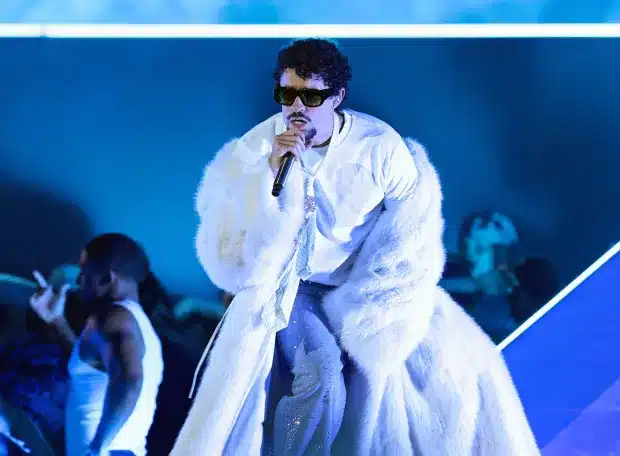
STWF Sports | Feb. 3, 2026 – With Super Bowl LX just days away, the buildup around Levi’s Stadium has reached a familiar fever pitch. Beyond the X’s and O’s and the avalanche of multimillion-dollar commercials, one storyline has captured global attention: Bad Bunny taking over the most-watched halftime show on the planet.
As rumors swirl about the setlist and surprise guests, fans keep asking the same question every February—how much is the NFL paying the artist who headlines the biggest 13 minutes in music?
The answer is as surprising as it is consistent.
Nothing.
Despite being one of the most-streamed artists in the world and a cultural force whose influence extends far beyond music, Bad Bunny will not receive a traditional performance fee for his Super Bowl halftime appearance. It’s not a slight, nor an exception. It’s long-standing NFL policy.
For decades, the league has held firm on one principle: Super Bowl halftime performers do not get paid in the conventional sense. Instead, the NFL—alongside partners such as Apple Music and Roc Nation—absorbs the full cost of production. That bill is anything but modest, often ranging from $10 million to $20 million.
Those expenses cover everything from custom-built stages and complex lighting rigs to pyrotechnics, rehearsals, travel, and accommodations for massive production teams. While artists aren’t cutting checks for logistics, they also aren’t collecting a paycheck.
There is, however, a technical exception. Union regulations require a nominal payment under SAG-AFTRA guidelines. In practical terms, it’s symbolic. Usher reportedly earned about $671 for his 2024 halftime performance, with roughly $1,800 more for rehearsals. Bad Bunny is expected to receive a similar union-scale amount—pocket change for a global superstar.
So why do it?
The answer lies in exposure—on a scale unmatched by any other entertainment platform. The Super Bowl isn’t just a football game; it’s a worldwide broadcast event that delivers instant access to more than 100 million viewers in the United States alone, with countless more watching internationally.
History shows just how powerful that exposure can be. After their 2020 halftime performance, Shakira and Jennifer Lopez saw streaming increases of 230% and 335%, respectively, within days. Usher’s 2024 appearance sparked a reported 2,000% surge in streams for his opening track, while Kendrick Lamar’s 2025 performance led to a 175% jump in U.S. streams almost immediately.
For Bad Bunny, the math is simple. Thirteen minutes on the Super Bowl stage functions as a global marketing campaign—one that fuels streaming royalties, merchandise sales, and demand for future tours. The return on investment often dwarfs any appearance fee the NFL could realistically offer.
The league understands this leverage. In 2015, the NFL reportedly explored the idea of asking artists to contribute a portion of their post-Super Bowl tour earnings in exchange for the exposure. While that proposal was ultimately shelved due to artist resistance, it underscored just how valuable that halftime slot is considered.
Some performers have gone even further. Both The Weeknd in 2021 and Dr. Dre in 2022 reportedly spent millions of their own money to enhance their shows, ensuring their creative visions were fully realized. At the Super Bowl level, prestige often outweighs profit.
Ultimately, Bad Bunny’s Super Bowl appearance isn’t about an NFL check—it’s about legacy. By commanding the world’s biggest stage on his own terms, performing in his language and style, he’s investing in something far more enduring than a one-night payday.
As he steps onto the field at Levi’s Stadium, Bad Bunny won’t be chasing dollars. He’ll be cashing in on cultural capital—the most valuable currency in modern music.